Story: Poisonous plants and fungi

Black nightshade

Image
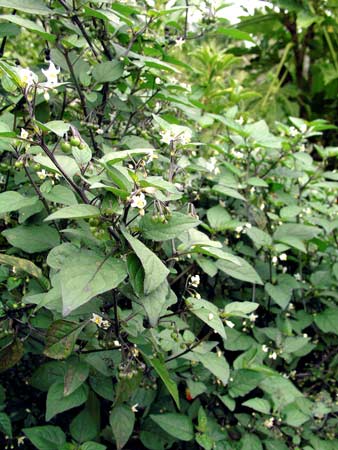
Black nightshade

Black nightshade and related species are probably responsible for more plant-poisoning admissions to hospital than any other plant in New Zealand. The unripe green berries of these common weeds are poisonous.

Using this item

Te Ara - The Encyclopedia of New Zealand

by Alastair McLean

This item has been provided for private study purposes (such as school projects, family and local history research) and any published reproduction (print or electronic) may infringe copyright law. It is the responsibility of the user of any material to obtain clearance from the copyright holder.

All images & media in this story

How to cite this page

Maggy Wassilieff, Poisonous plants and fungi – Poisonous garden plants, Te Ara – the Encyclopedia of New Zealand, https://teara.govt.nz/en/photograph/9783/black-nightshade (accessed 5 June 2026).

Story by Maggy Wassilieff, published 1 March 2009.

Comments

william
28 April 2012
my whanau has been eating poroporo for many years.ihave just cooked some for my daughter and she has just loved it.her comments it tastes like puha was her comment.kai time at my home whanau poroporo.yeye mmm.
Grant Allpress
03 July 2010
I have eatten black nightshade for over 20 years.my wifes family and whanau from a valley in northland have done so for as long as they can remember.It needs a lot of preparation and this is where people not used to eatting wild foods are challenged.the steem is snaped off about 150 mm from top of the plant.if it doesen't snap off you are trying to pick too low.then the leaves are removed arduous but with a tasty meal in mind.green or purple seeds are removed,also the small white with a tinge of purple flowers are removed.The leaf matter is then washed and rubbed to partly remove a dark green juice.this rubbing sofens the leaves and they are not so bitter as the european pallet may detect.when cooked the water must be boiling,they are cooked with meat.Tastes very similar to spinich in taste and look.In the north it is called Poroporo.not the tree,it is an inland bush food.