

-
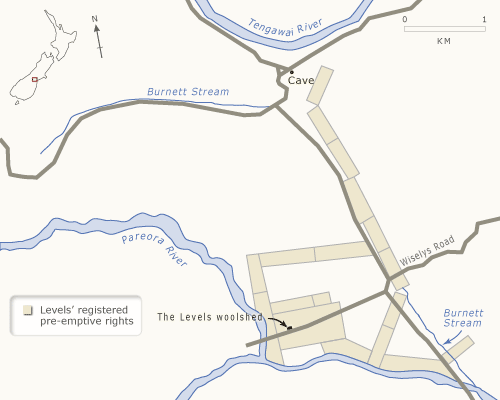
February 1866
-
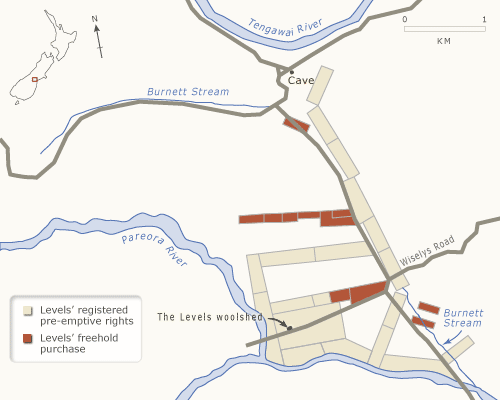
January 1873
-
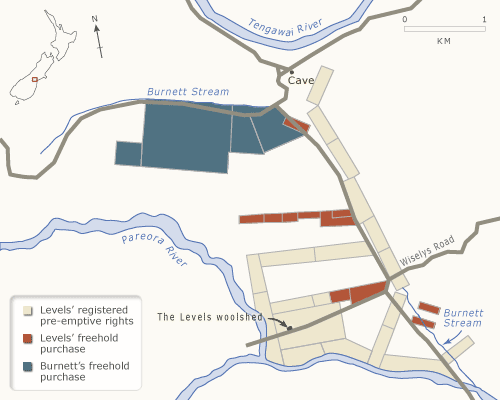
May 1873
-
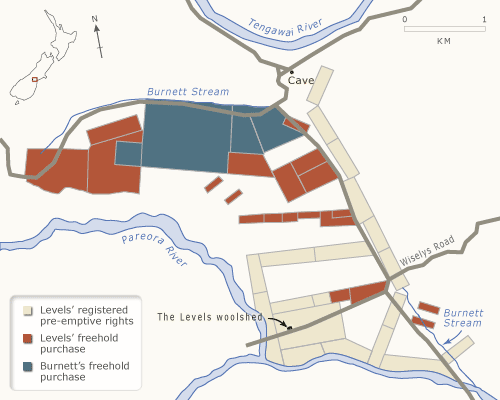
June–December 1873
-
September 1874
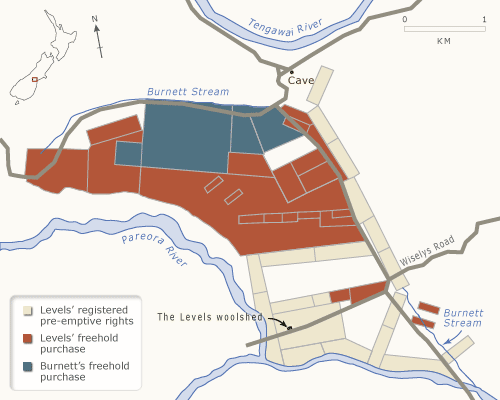
Spotting was the practice of improving and then freeholding key parts of a sheep run such as waterways, so adjacent areas became valueless to other potential purchasers. Common in the 19th century, it enabled some runholders to acquire vast tracts of land. This map shows spotting on the Levels Station, South Canterbury, between 1866 and 1874.
Using this item
Te Ara - The Encyclopedia of New Zealand
Source: Noel Crawford, The station years: a history of the Levels, Cannington, and Holme Station. Cave: N. Crawford, 1981, p. 49
This item has been provided for private study purposes (such as school projects, family and local history research) and any published reproduction (print or electronic) may infringe copyright law. It is the responsibility of the user of any material to obtain clearance from the copyright holder.