

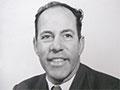

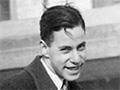
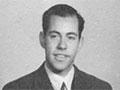
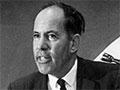
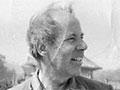
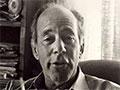
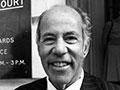
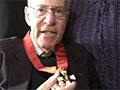
Wolfgang Rosenberg was an influential economist and public intellectual in New Zealand during the second half of the twentieth century. A refugee from Nazi Germany, he spent much of his working life as a lecturer in economics at the University of Canterbury before a late career shift to legal practice. He was a prolific writer on issues ranging from import controls, foreign investment, civil liberties, industrial relations and international affairs during the Cold War. Above all, he was best known for his ardent defence of full employment, of the broadly Keynesian social democratic order that prevailed in the West after the war, and of the socialist world. He was, in turn, a ferocious opponent of US-led Cold War policy and propaganda, neoclassical economics and free market capitalism. He often defied both economic orthodoxy and western Cold War ideology. For this, he gained the admiration of many on the left while he provoked the ire of conservative politicians and sometimes clashed with fellow economists. For much of his New Zealand life, he was the subject of surveillance by the security services.
Early life
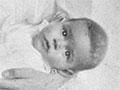
Wolfgang Rosenberg was born in Berlin on 4 January 1915, the second of three children of lawyer Curt Rosenberg and his wife Elsa Stein. His father served as a German-French interpreter at a prisoner of war camp during the First World War. The family typified the ‘integrated’ German-Jewish middle class of the era. Like many Germans, the Rosenbergs faced difficulties after the war, particularly during the hyperinflation of 1923. Rosenberg and his siblings were raised in a largely secular home, shaped by a culture of learning and politics. Curt was a member of the German Social Democratic Party (SPD) and served on the legal defence team for Karl Liebknecht when he was tried for treason in 1907. Wolfgang credited his father with his ‘early interest in the direction of Socialism which has remained a plank of confidence and satisfying social activity and a source of fruitful thought all my life’.1
Rosenberg began his schooling at Französisches Gymnasium in 1920. The school appealed to parents wanting a high-class academic education for their children. It had a reputation for tolerance and cosmopolitanism, and many Jewish students. Instructions were in French, and pupils could also study Latin, Greek, and English. Alongside the traditional rigours of a classical education, students were introduced to modern texts, from Tolstoy and Goethe, and the sciences, including Albert Einstein’s then recent theory of relativity.
The future economist Albert Hirschman was among his schoolfriends. The pair were involved in extracurricular activities from rowing to reading study groups, where they read the writings of Karl Marx. Marx, a major influence on Rosenberg’s life, provided a framework for understanding events beyond the school walls, at a time that Germany was in the throes of the great depression, mass unemployment and political polarisation. Around 1930–31, Rosenberg joined the Sozialistische Arbeiterjugend (The Socialist Workers’ Youth), the youth branch of the SPD.
With the Nazis’ rise to power in 1933, Rosenberg’s father was forced to close his law firm, and his elder brother Gerhard left the country to continue his studies in London, anticipating the expulsion of Jews from universities. His grandmother, Louise Stein, took her own life, in part out of despair at the political situation. Rosenberg had graduated from the Französisches Gymnasium in 1932 and secured an apprenticeship at Berlin’s largest state-owned bank, the Reichs-Kredit-Gesellschaft, only to be ‘purged’ the following year. He later secured work at a major Jewish-owned bank, M.M. Warburg & Co.
New Zealand captured Rosenberg’s imagination from a young age. His mother’s schoolfriend Greta Short lived in New Zealand and had described the minimal poverty in the country as early as 1923. In 1935–36, he read about the reforms of the first Labour government and began making concrete plans to emigrate. He had academic ambitions but was now barred from attending university. Short sponsored his temporary holiday visa, likely the best he could get given New Zealand’s strict immigration laws, and he left Berlin on 6 May 1937. His visa was later extended. Rosenberg’s immediate family emigrated to the United Kingdom in the following years, but many extended family members who remained in Germany did not survive the Holocaust.
Rosenberg rarely wrote about his life in Germany, but regularly stressed what he saw as the lessons of the era: the failures of laissez-faire capitalism, the dangers of mass unemployment, the fragility of civil liberties, and the threat posed by the development of an armaments industry. These lessons shaped his views on economics and his political commitments for the rest of his life.
Early years in New Zealand
Rosenberg arrived at Queen’s Wharf, Auckland, on 28 June 1937, a date he would later celebrate as a second birthday. He caught the train to Wellington the following day and met Short, who introduced him to several students at her music studio, including Ann Eichelbaum. The two began dating around 1941–42.
Rosenberg’s early contacts in New Zealand were largely with members of the Jewish community and the Jewish Refugee Committee. He assisted architect Helmut Einhorn and his wife Ester to emigrate in 1939. He took up work as an accountant at various companies, and during the summer worked on a farm owned by fellow émigré Karl Haas in Pahīatua. His hitchhiking trips to Pahīatua and elsewhere left a strong impression of a productive and prosperous country. Rosenberg had high hopes that Labour’s reforms were steps on the road to a true socialist state but was surprised by what he saw as New Zealanders’ apathy about these reforms.
In 1938, aged 23 and with no formal education in economics, Rosenberg made his publishing debut in Economic Record with a piece on central banking and the Great Depression. His conclusion to a book review in a later issue of the same journal showed his early preoccupation with unemployment, which he considered an evil that needed curing at any price.
The same year, Rosenberg enrolled to study economics at Victoria University College under Bernard Murphy, among others. Despite Murphy’s avowed conservatism on economics, the two held each other in high regard and remained friends until Murphy’s death. When Rosenberg graduated in 1943, Murphy described him as the most able student of his 25 years in the department. While studying, Rosenberg began absorbing the writings of influential British economist John Maynard Keynes, who became a second foundational influence alongside Marx.
Rosenberg studied and worked part time, and threw himself into left-wing political, social and cultural activities. He was elected to the Student Association alongside Ann Eichelbaum, joined the Tararua and Wellington University College tramping clubs and Ngāti Pōneke Māori Club, and served as treasurer for the Wellington Co-operative Book Club and the Progressive Publishing Society. He also become close to the family of optician and family planning reformer Lois Suckling. The Sucklings, with whom Rosenberg often boarded, became something of a second family. During these years, he connected with a number of soon to be influential left-wing figures, including Shirley Smith, W.B. Sutch, Ron Meek and Jack Lewin. He increasingly shared the left-wing critique that Labour had abandoned socialism.
As a German national Rosenberg was branded an enemy alien during the Second World War and had his movements restricted. Charged on 16 February 1940 with not registering his movements with the police as required, the authorities continued to watch him. Police interviewed him on several occasions to prove his bona fides as a refugee and opponent of Hitler. His 1939 application to join the army was rejected, presumably on security grounds. He did, however, serve in the Emergency Precautions Service in 1942, and worked in market gardens to help fill labour shortages. In 1944, he joined the Royal New Zealand Air Force where he served alongside Colin Scrimgeour, though again due to the perceived security risk he was to remain in New Zealand. His status as an enemy alien was revoked in 1944.
Early 1946 was a turning point in Rosenberg’s life: he was naturalised as a New Zealand citizen in January, married Ann Eichelbaum on 15 February, and soon afterwards was appointed a lecturer in economics at Canterbury University College.
Christchurch economist
The newly married couple moved to Christchurch and eventually settled in the suburb of Cashmere. Shortly after their arrival, Ann took up a scholarship in England to study in the newly developed field of psychiatric social work, in which she would make a significant contribution. On her return, the pair started a family eventually numbering three children, George, Bill and Vera. Rosenberg’s marriage and family life were hugely important to him. His relationship with his children was always close, and, much more than most men of that era, he was interested in their development.
Rosenberg taught papers at all levels on the contemporary and historical New Zealand economy, national income, business fluctuations and economic policy, and applied economics. An engaging lecturer, he refrained from espousing his political beliefs in the lecture theatre, though one student recalled that his support for the underdog and socialist opinions nevertheless shone through. Among his many students were Don Brash, Brian Easton, Dennis Rose and Bill Rowling. He was promoted to senior lecturer in 1952 and later to reader. He made a major contribution to the department’s publishing record and in 1973 published a textbook, Money in New Zealand: banking credit and inflation. Despite this, his career may have suffered because he wrote for a popular audience and because of his heterodox views on economics and politics.
Public intellectual during the Cold War
Rosenberg quickly took on the role of public intellectual. He addressed various organisations, spoke regularly on radio, and wrote prolifically in newspapers and other publications, including political and literary journals such as Here and Now and Landfall. He frequently commented on the Cold War, civil liberties and industrial relations. On international relations, he called for peaceful co-existence between the Soviet Union and the capitalist West. In the context of the 1951 waterfront dispute, Rosenberg challenged the assumption that high wages only fuelled inflation and argued against the constraints imposed by the arbitration system. As he saw it, a weak labour movement, constrained by arbitration, would be unable to mount a successful defence of New Zealand’s welfare state against determined opposition.
From 1946, he wrote a regular column on international affairs in the Labour Party newspaper Standard under the penname ‘Criticus’. His column was cancelled by the managing director of the newspaper, union boss Fintan Patrick Walsh, for his critical commentary on western policy and rhetoric, particularly during the Korean War. Trade unionists and Labour Party members protested his dismissal.
He was also outspoken on civil liberties. In 1950, the chancellor of the University of New Zealand, Sir David Smith, said that he would not appoint communists to the staff of a university college. Rosenberg responded in Landfall, defending academic freedom and critical thought, and suggesting that successful research students question orthodoxy even in the face of public disapproval and hostility. In 1954, Rosenberg helped found the Canterbury Council for Civil Liberties.
Rosenberg become involved in a number of social and protest movements, including the nuclear-free, anti-Vietnam war, and anti-apartheid movements, and the movement opposing the establishment of US military bases in New Zealand. In 1960, he and Winston Rhodes founded the New Zealand Monthly Review, an independent socialist journal that would be published until 1996. In 1975, he was one of the founding members of the Campaign Against Foreign Control in New Zealand, along with his son Bill. He became a regular contributor to its publication, Foreign Control Watchdog. Rosenberg argued in 1968 that New Zealand should take a non-aligned and peaceful stance independent of the major power blocs.
Rosenberg undertook several overseas sabbaticals. In 1952, he enrolled to study at the London School of Economics, worked in the Bank of International Settlements in Switzerland, attended the Vienna Peace Conference and made his first visit to Moscow. In 1962, he and his family lived in Geneva for a year while he worked for the United Nations’ Economic Commission for Europe, editing a study on the European timber industry.
He was also closely interested in the fate of socialist states abroad. Rosenberg’s faith in the socialist project was central to his world view and was rooted in his fear of a resurgent fascism. Despite his concerns about civil liberties domestically, Rosenberg’s sympathies for the socialist world outlasted the 1956 revelations about Stalin and the Hungarian Uprising of the same year. Shaken by the splits on the left in Germany before the rise of the Nazis, Rosenberg did not take a side in the Sino-Soviet split and remained sympathetic to all socialist states across the divide. He visited and wrote about much of the socialist world, including the Soviet Union, Yugoslavia, Albania, China, North Korea and the German Democratic Republic. His travels in the 1960s and 1970s gave him optimism about the future of socialism as an economic and social system which could relieve poverty in underdeveloped countries. Rosenberg founded the New Zealand–Democratic People’s Republic of Korea Society in 1972 and led a delegation to the country in 1979. His travels and writing became the basis for what was perhaps the first course in a New Zealand economics department on the topic of socialist economics.
Full employment
Rosenberg published his first major book, Full employment: can the New Zealand miracle last?, in 1960. It was both an explanation for and a celebration of New Zealand’s decades-long record of full employment, but also a warning of future threats, including complacency, foreign investment, and New Zealand’s proposed membership of the International Monetary Fund (IMF). Responding to Rosenberg’s criticism of the application to join the IMF in a 1961 pamphlet, National’s Tom Shand accused him in Parliament of circulating communist propaganda in a country which had granted him asylum. This caused an uproar, raised Rosenberg’s profile, and increased sales of the pamphlet. Shand later apologised for the accusation.
The defence of full employment remained the major theme of Rosenberg’s work through the 1970s. He described full employment as the ‘fulcrum of the welfare state' and was sharply critical of government efforts to abandon import controls and other policies designed to maintain it.2
While he still believed the Labour Party was the best vehicle for maintaining full employment and promoting a democratic socialist alternative, he often challenged it to adopt a more radical agenda. Rosenberg was equally critical of the contrasting economic policies of Robert Muldoon’s National government (1975–1984) and the fourth Labour government (1984–1990). In 1978, he argued that Muldoon was taking the country on a road to depression and laid out a democratic socialist alternative. In 1986, he argued that the free-market policies being pursued by Labour, and free-market capitalism in general, made commitment to the ‘magic square’ (with sides comprising full employment, growth, balanced foreign exchange, and price stability) impossible.3 He became a close friend and confidant to Labour MP Jim Anderton, who formed the Economic Policy Network in 1986 and the NewLabour Party in 1989.
In later life, Rosenberg believed that his many warnings about the threats to full employment had come to pass. When the journalist Rebecca Macfie visited his home in 1988, he pulled out a copy of his 1972 book, Import control and full employment… or else! ‘Read that’, he said. ‘You see, it’s all coming true’. As Macfie put it, Rosenberg had been merely writing against the tide of mainstream economic opinion in 1972. By 1988, he was a ‘heretic, daring to utter support for a view banished from the economic landscape by Rogernomics’.4
Later life and legacy
When he retired from the University of Canterbury in 1979, Rosenberg urged his fellow economists to ‘turn on to a fairer road’.5 In his later life, he would recall that his tenure at Canterbury was ‘too short a time. You couldn’t imagine a more satisfactory job when you are paid to do exactly what you are interested in. It was constantly stimulating’.6
Anticipating retirement, Rosenberg enrolled to study law in 1975 and from 1980 practised in criminal and immigration law, taking on cases for meagre legal aid payments. His son Bill recalled his sympathy for his clients and that he frequently lost sleep over their difficulties. He was also active in the Howard League for Penal Reform. He continued to write and comment on economics, and his final major work was New Zealand can be better and different: why deregulation does not work (1993).
Rosenberg received the New Zealand Order of Merit in 2000. He died in Christchurch on 16 February 2007, aged 92. Throughout his life, he was a fiercely independent economist. In the Festschrift produced to mark his retirement, former Labour Prime Minister Bill Rowling praised Rosenberg’s ‘singular influence on the development of New Zealand economic policy. His contribution has always been vigorous, independent, and above all, related to his personal concern for the wellbeing of people’.7 He also had his critics, including a number of political leaders and some fellow economists. Some suggested he was ‘spitting in the wind’, advocating policies like import controls that simply would not return.8 He faced personal attacks from right-wing politicians, but remained unflinching in his commitments. As he told students in 1962, ‘It is dangerous to be an economist – but it is fascinating and fun’.9
- ‘Proposal for a funeral speech for Wolfgang Rosenberg’, December 2001. Private collection. Back
- W. Rosenberg. ‘Full employment: the fulcrum of social welfare’. In Social Welfare and New Zealand Society. Ed. A.D. Trlin. Wellington, 1977. Back
- D. Grant. Anderton: his life and times. Wellington, 2022: 123. Back
- R. Macfie. ‘Protectionist argument gains strength.‘ Christchurch Star, 22 December 1988. Back
- W. Rosenberg. ‘Forty years of joy and sorrow of a New Zealand economist.‘ New Zealand Listener, 10 November 1979: 139. Back
- ‘A Wolf who eats dogma for breakfast.’ Press, 13 April 1994. Back
- B. Rowling. ‘Forward.’ In New Zealand and the World: essays in Honour of Wolfgang Rosenberg. Ed. W.E. Willmott. Christchurch, 1980: 3. Back
- ‘The futile exercise of spitting into the wind.’ Dominion, 10 March 1972. Back
- Evening Post, 2 February 1962. Back