

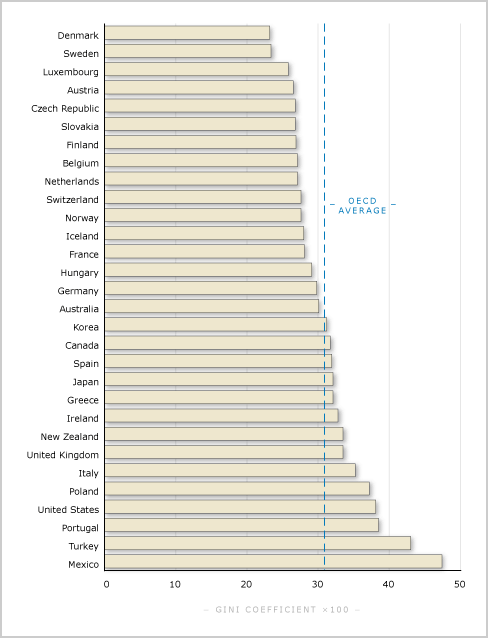
This graph provides an international comparison of equality of income. It uses the Gini coefficient, which calculates the average income distance between any two individuals in the population, scaled by average income. Scores close to 100 imply extreme inequality; those close to zero suggest great equality. New Zealand's level of 35 was above the OECD average of 32. It was more equal than Mexico and the United States, around the same as Australia but less equal than most European countries. The figures were from 2014-2015, except for Japan (2012).
Using this item
Te Ara – The Encyclopedia of New Zealand
Source: OECD Income Distribution Database
This item has been provided for private study purposes (such as school projects, family and local history research) and any published reproduction (print or electronic) may infringe copyright law. It is the responsibility of the user of any material to obtain clearance from the copyright holder.