

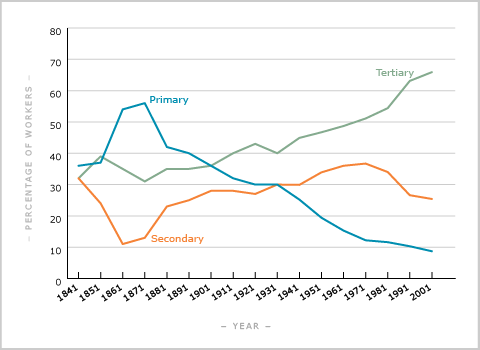
The primary (agricultural, forestry and mining) sector of the workforce was the largest in the 19th century, before declining to become the smallest from the 1930s. The secondary (manufacturing) sector has fluctuated over time, overtaking primary industry in the 1930s. The tertiary (services) sector has been the largest for a century and now employs more people than the other two sectors combined.
Using this item
Te Ara – The Encyclopedia of New Zealand
Sources: Brian Easton, ‘Different kinds of countries and cities.’ Cultures of the Commonwealth: essays and studies 9, (Spring 2003), pp. 25–35; Statistics New Zealand
This item has been provided for private study purposes (such as school projects, family and local history research) and any published reproduction (print or electronic) may infringe copyright law. It is the responsibility of the user of any material to obtain clearance from the copyright holder.