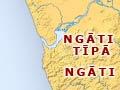
… to acquire land for settlement led to the Whangārei coast tribes losing much of their lands. After the Hauraki, … 10 acres (4 hectares) per head. The economy of the coastal tribes was further disrupted as the government seized … Ngātiwai Trust Board In the early 2000s the coastal tribes of the Whangārei area, often under the umbrella of …
Type: Story Page
… as ngārara, and less commonly as kumi. One that is known by tribes throughout New Zealand is Ngārara Huarau. In one … at Ōtautahanga pā, a stronghold of the Ngāti Raukawa tribe. The people prospered under his protection, and would …
Type: Story Page
… canoe journeys stayed and settled in Tāmaki. Older canoes, tribes and conquests The older tribes of Tāmaki such as Te Wai-o-Hua and Te Kawerau-a-Maki … , which landed around Leigh and Kawau Island. Many other tribes have lived on the Tāmaki isthmus, including Ngāti …
Type: Story Page
Part of story: Tāmaki tribes … the breeding season limits on fishing – for instance, tribes sometimes fished with a huge net strung between two … In a letter in 1895, Tāmati Ranapiri of the Ngāti Raukawa tribe explains customs that limited the taking of kahitua, a …
Type: Story Page
… of tribal land limited the economic opportunities for Māori tribes, but restoration of some tribal assets and a …
Type: Story Front
… and influenza. With the rapid loss of their land, displaced tribes struggled to survive. In the 20th century things …
Type: Story Front
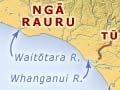
… Some Ngā Rauru entered into a pact with other Taranaki tribes in the 1850s to oppose further land sales. Māori … During the 1880s there were attempts to compensate Taranaki tribes, including Ngā Rauru, for their losses, and some land …
Type: Story Page
… is strong; according to 2013 statistics, 37% of the tribe are fluent speakers of Māori, the largest proportion of any tribe. Te Hui Ahurei a Tūhoe Thirty years ago Tūhoe elders, … to organise a gathering to bring home members of the tribe living in the cities, to celebrate matemateāone (blood …
Type: Story Page
Part of story: Ngāi Tūhoe … of many people who have no real relationship with the tribe. Urban Māori authorities have sought to be recognised as iwi (tribes) or tribal authorities in their own right so they can …
Type: Story Page
Part of story: Urban Māori … the 19th century the Crown had acted unfairly toward Māori tribes in Taranaki. In response to this finding the Ngāti … body of Ngāti Ruanui, with responsibility for managing the tribe’s assets for the benefit of its members. …
Type: Story Page
Part of story: Ngāti Ruanui … of 1922 and 1926, by which Te Arawa and Tūwharetoa tribes accepted annual compensation and other concessions in … lakes and Lake Taupō the Crown’s growing recognition that tribes that had lost large tracts of land, especially … Tahu people of the South Island, and that some North Island tribes had been subjected to unjust or excessive land …
Type: Story Page
… of Gate Pā (Pukehinahina) In March 1864 the Tauranga Moana tribes challenged British troops, stationed at Te Papa in … sea Ngāi Te Rangi, Ngāti Ranginui and Ngāti Pūkenga are the tribes. This serves to remind Tauranga Moana people that …
Type: Story Page
Part of story: Tauranga Moana … Ōhiwa Harbour and Whakaari (White Island), sacred to the tribes of this curving coastline. …
Type: Story Front
… thrived in the South Island. They intermarried with local tribes, and adopted their beliefs. Their lands cover much of …
Type: Story Front
… Island. Over time, they lost much of their land. Today, the tribe is working to restore Lake Horowhenua and revive their …
Type: Story Front
… Māori tribes’ lively participation in the economy fell away as …
Type: Story Front
… continued friction between Ngāti Apa and neighbouring sub-tribes south of Rangitīkei. Between 1864 and 1867 the … sent men to fight in several government campaigns against tribes in the lower North Island. However, this support went …
Type: Story Page
… their families. Others were kaitiaki, or protectors of iwi (tribes) and hapū (sub-tribes). These ones were respected, and people who passed by …
Type: Story Page
… was reached as to how the assets were to be shared among tribes. In 1992, a second part of the deal, referred to as … reached as to how the assets would be shared. Over 90% of tribes agreed with a proposal that held 50% of assets centrally and allocated the rest directly to tribes based on coastline length and tribal populations. In …
Type: Story Page
… During the 1820s and 1830s, members of Te Āti Awa and other tribes left their ancestral home in Taranaki and travelled …
Type: Story Front