… uses ‘matou’ (us or we) to refer to the confederation of tribes, while in English the first article uses, ‘we’, but … ‘te Wakaminenga o nga Hapu o Nu Tirene’ (the United Tribes of New Zealand). The second article declared the …
Type: Story Page
… on at Waitara was offered for sale by Te Teira, one of the tribe’s junior chiefs. The offer was made to the … after a year of fighting. The Crown accused the tribe of rebelling. In 1865, the government used the 1863 … political structures, which then included over 90 sub-tribes, collapsed to the present six of Ngāti Rāhiri, …
Type: Story Page
… of Te Tau Ihu (Nelson–Marlborough) have survived. The eight tribes of the area are now increasingly significant … leases with rights of renewal in perpetuity. The eight tribes After nearly 1,000 years of migration, conquest, and intermarriage there are eight mutually recognised tribes in Nelson–Marlborough today. The Kurahaupō tribes …
Type: Story Page
… into the fishing industry, and allocating fishery assets to tribes. How this was to be achieved has been the subject of … Act 2004. When this was passed it was anticipated that tribes would receive around half of the estimated $750 …
Type: Story Page
… 1991, residents of Māori descent were asked to indicate the tribe to which they were affiliated. The figures below show … Waikato (including those who indicated more than one tribe), and the regions where they were found in the … Māori to indicate tribal affiliation – but not of multiple tribes – was that of 1901. 1901 census: 4,542 1991 census: …
Type: Story Page
Part of story: Waikato tribes … 1991, residents of Māori descent were asked to indicate the tribe to which they were affiliated. The figures below show … Te Whakatōhea (including those who indicated more than one tribe), and the regions where they were found in the … Māori to indicate tribal affiliation – but not of multiple tribes – was that of 1901. 1901 census: 599 1991 census: …
Type: Story Page
Part of story: Te Whakatōhea … 1991, residents of Māori descent were asked to indicate the tribe to which they were affiliated. The figures below show … Ngāpuhi (including those who indicated more than one tribe), and the regions where they were found in the … Māori to indicate tribal affiliation – but not of multiple tribes – was that of 1901. 1901 census: 6,361 1991 census: …
Type: Story Page
… 1991, residents of Māori descent were asked to indicate the tribe to which they were affiliated. The figures below show … Maniapoto (including those who indicated more than one tribe), and the regions where they were found in the … Māori to indicate tribal affiliation – but not of multiple tribes – was in 1901. 1901 census: 1,572 1991 census: 21,936 …
Type: Story Page
Part of story: Ngāti Maniapoto … 1991, residents of Māori descent were asked to indicate the tribe to which they were affiliated. The figures below show … Ngāti Porou (including those who indicated more than one tribe), and the regions where they were found in the … Māori to indicate tribal affiliation – but not of multiple tribes – was that of 1901. 1901 census: 4,164 1991 census: …
Type: Story Page
Part of story: Ngāti Porou … 1991, residents of Māori descent were asked to indicate the tribe to which they were affiliated. The figures below show … Ngāti Ruanui (including those who indicated more than one tribe), and the regions where they were found in the … Māori to indicate tribal affiliation – but not of multiple tribes – was that of 1901. 1901 census: 853 1991 census: …
Type: Story Page
Part of story: Ngāti Ruanui … 1991, residents of Māori descent were asked to indicate the tribe to which they were affiliated. The figures below show … Ngāi Tūhoe (including those who indicated more than one tribe), and the regions where they were found in the … Māori to indicate tribal affiliation – but not of multiple tribes – was that of 1901. 1901 census: 1,094 (indicated as …
Type: Story Page
Part of story: Ngāi Tūhoe … 1991, residents of Māori descent were asked to indicate the tribe to which they were affiliated. The figures below show … Ngāti Awa (including those who indicated more than one tribe), and the regions where they were found in the … Māori to indicate tribal affiliation – but not of multiple tribes – was that of 1901. 1901 census: 1,701 (includes Te …
Type: Story Page
… 1991, residents of Māori descent were asked to indicate the tribe to which they were affiliated. The figures below show … Kahungunu (including those who indicated more than one tribe), and the regions where they were found in the … Māori to indicate tribal affiliation – but not of multiple tribes – was that of 1901. 1901 census: 5,064 1991 census: …
Type: Story Page
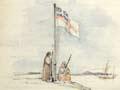
Part of story: Ngāti Kahungunu … Flag of the United Tribes of New Zealand The need for a state flag arose in the … the design. The flag became known as the flag of the United Tribes of New Zealand. Busby hoped that the flag would … the sovereign rulers of New Zealand. Flying the United Tribes’ flag The United Tribes’ flag was replaced as the …
Type: Story Page
… connection between Awanuiarangi and Whātonga. Related tribes Te Āti Awa of Wellington have close connections with … on a series of battles and migrations that brought several tribes down from Kāwhia and Taranaki to the Kāpiti Coast and …
Type: Story Page
… leaders began the difficult task of reconstructing their tribe, but with little outside support. Unlike other tribes, Ngāti Awa did not have a tribal trust board, nor did …
Type: Story Page
… The Ngāti Awa chief Tamatearehe was speaking about his own tribe when he commented: Kei runga te kōrero, kei raro te … if limited. However, the settlers’ demand for land and the tribe’s desire to guard their sovereignty meant that Ngāti … to his son Wēpiha Apanui, who went on to become one of the tribe’s educated élite, playing a significant role in tribal …
Type: Story Page
… arranged at Kaiapoi and confirmed at Taumata in Otago. The tribes mingle While there were skirmishes between Ngāi Tahu and the tribes of Raki-ihia, the settlement was enduring. In fact, … in 1840 were descendants of this union, and of all three tribes, Ngāi Tahu, Ngāti Māmoe and Waitaha. The West Coast …
Type: Story Page
… who arrived from Hawaiki on board the Mataatua canoe. The tribe have left their footprints in many parts of the … acknowledged as the principal ancestor of many North Island tribes, including Ngāti Awa. Toi’s firstborn was Rauru, …
Type: Story Page
… Āti Awa of north Taranaki is one of several closely related tribes originating from the ancestor Awanuiarangi. According … to move south following disagreements with other local tribes. They relocated to both the Bay of Plenty, where the … whether one was settled after the other. Splitting of Awa tribes In the 1820s many Te Āti Awa had moved south from …
Type: Story Page