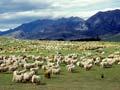
… In the South Island, as European settlers arrived from the early 1840s on, … part in the establishment and expansion of large-scale sheep farming. Opening up the country At the time of European … South Island sheep runs: tussock and scrub …
Type: Story Page
… The first shipment of frozen meat was sent from New Zealand to England in 1882. It was a turning point for New Zealand’s economic history, and for sheep farming. At first, an international depression kept prices …
Type: Story Page
Part of story: Sheep farming … has played an important part in the success of agriculture and horticulture in New Zealand. Farming had to be adapted to local conditions, especially as … and vegetables, were also grown for trade with Pākehā. Sheep breeds From the 1840s, most sheep on New Zealand farms …
Type: Story Page
… Sheepdog trials are a competitive sport in which handlers direct their dogs to move sheep around a field and … wider audience. History Dog trials are part of New Zealand farming history and probably date back to a trial in Wānaka … Sheepdog trials …
Type: Story Page
… prices were among the first things to go. Fertiliser and noxious weed control subsidies were also removed. … to meet the rising interest rates, were forced to sell up. Sheep numbers fell by over 43% from the heights of 1982, to … to 3% compared to 52%. The government viewed pastoral farming as an industry in decline. Farmers respond However, …
Type: Story Page
… Wairarapa's economy is dominated by pastoral farming. The industry is dominated by sheep and beef cattle, and dairying. In 2012 the region, including … A farming economy …
Type: Story Page
… 1815 a small amount of wool was exported from the Bay of Islands to Sydney. New Zealand’s first commercial sheep farmer was John Bell, who in 1835 sold wool in Sydney … in their own country. In Marlborough in 1849, New Zealand farming pioneer Frederick Weld described shearers on his …
Type: Story Page
… These days the terms shearing shed and woolshed are used interchangeably, but they were originally quite different. In the earliest days of sheep farming in New Zealand, the animals were shorn outside on …
Type: Story Page
Part of story: Farm buildings … musterers, including dog driver, hill man, dog-walloper and mutton puncher. The terms scree-scrambler and tussock … the physical obstacles facing musterers in their pursuit of sheep, while gullyraker refers to the need to search gullies … In recent years, heli-mustering (using a helicopter to herd sheep) often replaces the hard labour of mustering on …
Type: Story Page
Part of story: Rural language … Commodity prices, especially for wool and meat, were high after the Second World War. In its … attracted crowds of up to 50,000. From dairying to sheep farming During the 20th century, many dairy farmers switched … Farming: 1950s to present day …
Type: Story Page
… farms have given students a practical introduction to farming and experience towards earning a qualification. Ruakura The … dairy unit and 370 hectares used for farming deer, sheep and beef, making silage and hay, and growing green …
Type: Story Page
… parasites The most widespread modern health problems in sheep are caused by nematode parasites, which live in the … They cause diarrhoea (also called scours), poor growth and ultimately death, especially in young stock. Some … anthelmintic products has become an increasing problem in sheep as well as goats. Survival of the resistant Drench …
Type: Story Page
… Adopting a sheep, working on an organic farm, watching a farm dog … some of the many activities that visitors to rural New Zealand can enjoy. Tourism is often just a sideline income for …
Type: Story Front
… Land purchase The government’s most important contribution to … settlement in the North Island. Animal imports and disease Farming expanded rapidly in the South Island, and in the Wairarapa and Hawke’s Bay in the North Island. Sheep and cattle were imported in large numbers, mostly from …
Type: Story Page
… Livestock trucks are a common sight on New Zealand roads, carrying sheep, cattle and deer to saleyards, farms or freezing … hoof’. Stock have been transported around New Zealand since farming began here – by boat, rail and road, or on foot. …
Type: Story Front
… Grazing its cattle on pasture year-round, New Zealand supplies about 8% of the world’s export beef trade – but beef farming has long been the poor cousin of the sheep and dairy industries. … Beef farming …
Type: Story Front
… Early farming Pastoral farming – sheep and, later, beef cattle – … backbone of the regional economy for many years. The first sheep, a flock of 3,000 merinos, were driven into the region … Pastoral farming …
Type: Story Page
… used to be, but is a severe disease that cannot be treated and usually causes death. In deer it is associated with a … virus and probably comes from a form that affects sheep. Stags are more susceptible than hinds, and winter is … (TB) probably poses the biggest threat to the deer-farming economy, and also risks the health of farmers and …
Type: Story Page
… Cattle Dairy cattle need a balanced diet, especially before and after calving, and good pasture growth is important in … the surface soil and reduce subsequent pasture growth. Sheep Sheep graze pastures much more closely than cattle and are …
Type: Story Page
… Buildings on New Zealand farms range from the grand homesteads and huge brick shearing sheds of large sheep stations, to simple corrugated iron mustering huts, …
Type: Story Front