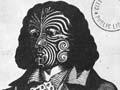
… not fatalities. Frederick Maning, an early-19th-century ‘Pākehā–Māori’ (a European who lived as part of a Māori …
Type: Story Page
… his concern about the widening gap between Māori and Pākehā. However, he saw the role of the government as …
Type: Biography
… her earlier attempt to open a hospital for Māori). Pākehā women’s health activism Women and men, as individuals …
Type: Story Page
Part of story: Women’s health … of working women was diverse. Increasing numbers of Pākehā women became senior leaders – women were 52.5% of …
Type: Story Page
… Māori population. Māori youth are more likely than young Pākehā offenders to come to the attention of police when …
Type: Story Page
Part of story: Youth offenders … choirs were the first to bring Māori-centred performance to Pākehā theatrical settings, and to incorporate waiata, poi … July 1909 a group of 40 Māori performers and their manager, Pākehā journalist William Farmer Whyte, departed Wellington …
Type: Biography
… in the latter part of 1936, when it brought together mainly Pākehā experts to discuss Māori problems and embarked on an … of detail, who committed himself to educating and informing Pākehā. He continued to support the Labour government, …
Type: Biography
… his father, and it was thought that his knowledge of Pākehā affairs would help his people. Some Māori leaders … status, recognised by Waikato and King Country Māori and Pākehā. He was welcomed back at a hui organised by Te Puea …
Type: Biography
… as reasons for divorce. When a marriage had been solemnised Pākehā-style, divorce had to be obtained in the same way. Up …
Type: Story Page
… terms like rimu and tarakihi name flora and fauna. The term Pākehā, and the Samoan words palagi (European) and afakasi …
Type: Story Page
… 1940s the couple bought the 124-acre farm Tautoro from its Pakeha owner. William's twin brother, Eru, and his family …
Type: Biography
… post-Selwyn era consolidate and expand both its Māori and Pākehā work. …
Type: Biography
… with awe by the other Māori there, who, taking him for a Pākehā, were continually astonished by the perfect Māori he …
Type: Biography
… the New Zealand wars of the 1860s. Volunteer force bands Pākehā settlers in the early 1840s established bands …
Type: Story Page
… in 1966, the first of its kind. Response from Māori and Pākehā was enormous, prompting him to comment that the …
Type: Biography
… work of the five architects. John Scott, of both Māori and Pākehā descent, is said to have drawn from both the whare …
Type: Story Page
… Maori Affairs from 1952 to 1975. It had several Māori and Pākehā scholars as editors and contributors, and included a …
Type: Story Page
… was declared a holiday in Greytown and over 800 Maori and Pakeha gathered to hear speeches and to plant the trees, …
Type: Biography
… Ngāi Tahu were heard to mutter, ‘Way goes the land. Now the Pākehā’s got the place.’ There was also a focus on the …
Type: Story Page
Part of story: Anniversaries … a 'turbulent rebel', and that the Maori could teach the Pakeha a great deal about 'fortitude and forbearance'. …
Type: Biography