… it had to be cultivated by men. Potatoes, introduced by Pākehā, did not have the same ritual needs and could be … Also, a number of significant battles saw Māori using Pākehā ships to travel to distant places. North Island iwi …
Type: Story Page
Part of story: Musket wars … Kooti in 1868, as well as a number of the district’s early Pākehā settlers. Retribution at Matawhero Around 50–55 Māori … new faith and became open to the possibility of resisting Pākehā authority. In mid-November 1865, 500 European and …
Type: Story Page
… about the impact of claims on conservation land, and many Pākehā were concerned that settlements would affect their … process included: perceived ‘treaty fatigue’ among some Pākehā settlements depicted by politicians and pressure …
Type: Story Page
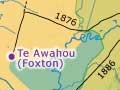
… particularly dramatic for Manawatū. In 1871 the Māori and Pākehā population was probably no more than 1,000 of each, … River there was only one town – Foxton. By 1881 the Pākehā population had increased to nearly 9,000, with more …
Type: Story Page
… of social, political and spiritual change. Land sales to Pākehā, the signing of the Treaty of Waitangi and … carvings were painted over with paint purchased from Pākehā merchants, represented entirely in paint, or replaced …
Type: Story Page
… eligible for this war pension, but at a lower rate than Pākehā veterans. The amount of these pensions was generally … dropped, and Māori veterans received the same pension as Pākehā veterans. Second World War The War Pensions Act 1943 …
Type: Story Page
… from all sections of society. His pursuit of greater Māori–Pākehā unity, his warm and respectful relationship with … faithful Presbyterian) and greater unity between Māori and Pākehā during his term. In addition to publishing his … of Māori words as ‘ordinary good manners’, reprimanding Pākehā for improper and offensive use of the language. 4 On …
Type: Biography
… reign for 34 years, during the most turbulent era of Māori–Pākehā relations. The major issues that confronted Māori … of many Māori to Christianity and the lifestyle of the Pākehā, Tāwhiao promised that those who had remained … is apparent in his renunciation of war between Māori and Pākehā. He said, 'Beware of being enticed to take up the …
Type: Biography
… passion for bush exploration and research into Māori and Pākehā history. Formative journalistic experiences included … of Kimble Bent , based on interviews with the old Pākehā-Māori . It was the first of several studies of … and explored the battle sites and sought out Māori and Pākehā veterans of the campaigns. The book does not explore …
Type: Biography
… bridges into the modern world by forging alliances with Pākehā, and encouraging education, while continuing to hold …
Type: Story Page
… on strike when they learned they would be paid less than Pākehā doing the same work. Governor George Grey threatened …
Type: Story Page
… Māori, Herries personified all the hostile forces of the Pākehā world which the native minister, James Carroll , had … their land; if it was not developed it should pass into Pākehā hands – by compulsion if necessary. Herries was also … Carroll in all his delicately balanced attempts to restrain Pākehā land hunger or to recognise, however tamely, Māori …
Type: Biography
… Shifts in fertility and family size The Pākehā baby boom was followed by a ‘baby bust’. From the … population was younger the birth rate was higher than for Pākehā. Pacific peoples had a higher fertility rate, and a … on money management in families indicated that for most Pākehā households women’s earnings were still seen as a …
Type: Story Page
… Then, in 1911, a district health nursing scheme staffed by Pākehā was established, ending any hopes for a Māori health … must not, so that they would be as fluent in English as Pākehā. Yet many of these girls came from Māori-speaking … Māori traits, while absorbing some of the polish of the Pākehā. Few of them knew much of cooking and cleaning, …
Type: Biography
… was appointed a KCMG in 1911 she was known to Gisborne Pākehā as 'The Lady'; to Māori she was known as Reiri Kara. … Māori sufferers to enter temporary hospitals staffed by Pākehā doctors; she also persuaded Māori women to help with … racial divisions and her mana was acknowledged by Māori and Pākehā alike. …
Type: Biography
… sales, courts, gold mining, telegraphs, schools, and the Pākehā justice system. Suspicious of the Pākehā, Tāwhiao stated in 1869 that Māori and Pākehā should remain separate. However, in 1881, after a …
Type: Story Page
… Despite this and her later acceptance of the presence of Pākehā, in 1846 (according to the contemporary account of a British soldier) she denounced the Pākehā settlers and upbraided those Māori in the Ōtaki … near the mouth of the Ōtaki River, she rented land to Pākehā settlers and offered it for sale; she and her son …
Type: Biography
… this union. Tohi Te Ururangi was regarded by both Māori and Pākehā as a man of great mana. He was described by Mary … and persuaded local Māori to pay their debts to a local Pākehā trader. Initially this work was unpaid, causing Tohi … of Tohi Te Ururangi was a great loss to Te Arawa and to Pākehā who had worked with him. T. H. Smith wrote that, …
Type: Biography
… depended on Māori trade and other assistance. The first Pākehā charities Pākehā settlers created their own informal support networks. …
Type: Story Page
… ‘native agents’ across the country, working alongside 23 Pākehā missionaries. Ngā Hīnota o Waiapu The first four … 1992. This set up three tikanga, or cultural streams – for Pākehā, Māori and Pacific peoples. Under this new system …
Type: Story Page