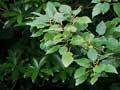
… racemosa ) is abundant in lowland, upland and subalpine forests and regenerating shrubland, from the central North … nectar produces a rich golden honey, much of it from forests on the South Island’s West Coast. In the past, the …
Type: Story Page
… Māori and kauri For Māori, the tallest trees in the forest traditionally had chiefly status. In the north of New … o te wao nui a Tāne’ (the kauri has fallen in the sacred forest of Tāne) – repeated whenever a great person dies. … them. The strongest child, Tāne Mahuta (the god of the forest), pressed his shoulders against his mother and pushed …
Type: Story Page
Part of story: Kauri forest … Arnold Hansson played a major role in New Zealand forestry during the 1920s and 1930s. Born Arnold Maria … directly to the establishment of a New Zealand Institute of Foresters in 1928. Ellis served as the first president very …
Type: Biography
… Vegetation changes Before European settlement some lowland forest had been burnt by Māori for cultivation or razed by … agriculture, the lowlands were transformed into pasture. Forests were felled or burned, and swamps were drained. …
Type: Story Page
Part of story: Waikato region … was largely covered in conifer–broadleaf and beech forest. By the time Europeans came, burnoff by Māori and … east. The Tararua Range and the north were still heavily forested. As farming began, most of the lowlands and eastern …
Type: Story Page
… in Dunedin, and soon after left New Zealand with the 11th Forestry Company, Corps of New Zealand Engineers. He spent … inventory of the lower and mid altitude indigenous forests; he was in charge of operations in the South Island. …
Type: Biography
… green, glossy leaves. It is found in coastal and lowland forest throughout the North Island and northern South … water and baking. Karaka regenerates prolifically. In some forest reserves of the southern North Island – and in … ( Pouteria costata ) only occurs in northern coastal forests. It has shiny green, leathery leaves that exude a …
Type: Story Page
… on the Volcanic Plateau around the early 1300s. They burnt forest to clear land for cultivation, and by the 19th … tussock, fern, mānuka and similar plants. Vegetation The forests that survived, on the higher reaches and south faces … conifers, notably tōtara, rimu, mataī and miro. The largest forested areas are along the Hauhungaroa Range, west of Lake …
Type: Story Page
… started by Māori had severely reduced South Canterbury’s forest cover. The only significant areas of podocarp forest – tōtara, kahikatea and mataī – were at Arowhenua and …
Type: Story Page
… especially on south-facing slopes. Under original forest cover, and where rainfall exceeds 2,000 millimetres, … protected nature reserves or have been planted in exotic forest. Nelson and Golden Bay This region has cool minimum … fertilisers are needed for forest grown on pakihi soils. Forests on dredge tailings usually also need boron. …
Type: Story Page
… parts of the country, but are a serious nuisance in Urewera Forest Park, on the east coast north of Napier, in the … thought to covered a similar land area to plantation forests. Controlling them is labour-intensive. Saplings must …
Type: Story Page
… Kelp forests New Zealand’s largest seaweeds are collectively … modify their environments, Charles Darwin likened them to forests. Kelp forests may be over 20 metres tall, and …
Type: Story Page
… plum-like covering. These are important foods for native forest birds such as kererū (wood pigeons), kākā (brown … to 2 metres in diameter. It is found throughout lowland forests of the North and South islands. It favours fertile, …
Type: Story Page
… like other passerines). Foraging Riflemen move around the forest in short aerial hops, clinging easily to rough tree … Habitat and distribution Riflemen live in a variety of forest types: lowland conifer–broadleaf forest, high-altitude beech forest, mature tawa forest and …
Type: Story Page
… radiata ) was recognised as the best species for plantation forestry because it grew quickly and its timber was … of the State Forest Service in 1921, extensive exotic forests were planted, mainly in the central North Island. … became the subject of scientific research. Pit planting Foresters developed a pit planting technique to improve tree …
Type: Story Page
… coast and lowlands. They grow singly or in groves on open forest margins as well as in swamps and along lake margins and river terraces. They often colonise openings in forests that have been created by disturbances, but they are …
Type: Story Page
… Māori also changed the landscape by burning large areas of forest, probably to make hunting easier. Māori agriculture … than kūmara. Transforming the landscape In 1840 rainforests covered about half of New Zealand’s land area, and …
Type: Story Page
… They tend to flock when feeding, usually high in the forest canopy, and have tuneful songs. All are at risk of … grams and females 14.5 grams. Found in native and exotic forests, whiteheads have gone from some areas but are still …
Type: Story Page
… surveyor Sam Hewlings built the first dwelling. The Talbot forest was milled in the 1860s and 1870s, but a small … There are major private projects to protect remnant native forests and features of geological interest. Mesopotamia …
Type: Story Page
… be commercially valuable. Trials of sand-binding plants and forest trees were done at the mouths of the Rangitīkei and … Plant radiata pine on the coastal edge. Plant commercial forests in the lee of the shelter achieved. From the 1960s …
Type: Story Page
Part of story: Dune lands