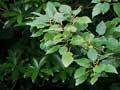
… or scale leaves. Broadleaf trees grow in conifer–broadleaf forests throughout New Zealand – mostly in the forest …
Type: Story Page
… Continuous forest cover Before people arrived, more than 80% of New … Early fires Only small, occasional fires occurred in the forests. These are shown by minor, temporary declines in … also kept tracks clear and made travel easier. The first forested areas to be cleared must have been easy to burn, …
Type: Story Page
… more than 80% of the country was covered in evergreen forests, consisting mainly of plants found nowhere else in the world. Most of the forests were a conifer–broadleaf mix, found mainly at lower …
Type: Story Page
… Whirinaki Forest 55,000-ha forest 100 km south-east of Rotorua, abutting the Kāingaroa … in Minginui sawmill supported it. All logging of native forests ended in 1985. Since then Whirinaki has become the …
Type: Story Page
… to 1915 he was an assistant superintendent and assistant forester for the Canadian Pacific Railway. He served in … 1919 Ellis was interviewed for the position of director of forests in New Zealand's newly created Forestry Department. …
Type: Biography
… secondary growth – they occur on sites that were formerly forest. In the absence of disturbance (fire and heavy browsing by mammals), the forests regenerate. Mānuka shrublands Mānuka ( Leptospermum …
Type: Story Page
Part of story: Shrublands … mature suburbs and town parks often replicates that of the forest edge – the richest area for birds. The common bush … Zealand photographer Geoff Moon noted that you’ll see more forest birds by sitting quietly for an hour than by actively …
Type: Story Page
Part of story: Birdwatching … Ancient forests New Zealand is a green land – most of its many native trees and shrubs are evergreen. The lush forests, often referred to as ‘native bush’ or simply ‘the …
Type: Story Page
… given names, as have at least 2,000 lichens and 500 mosses. Forest giants Although Māori had names for most plants, the … were so unlike any they had seen. New Zealand has two main forest types: Southern beech forest – from Northland south …
Type: Story Page
… two Sydney investors bought land and established Perpetual Forests (later New Zealand Forest Products). The New Zealand …
Type: Story Page
… of the far north. It is abundant in upland and mountain forests in the North Island, and extends down to sea level … Island. It regenerates well after the destruction of tall forests and at high altitudes forms dense secondary …
Type: Story Page
… Australia, New Caledonia, New Guinea and South America. Forest profile New Zealand has two main types of native … million hectares) of New Zealand’s remaining native forest. Forests of beech and other tree species make up one quarter …
Type: Story Page
… In the 1800s, New Zealand’s native forests seemed to provide a limitless source of timber, but … supply was running out. To meet the demand for wood, vast forests of faster-growing introduced species – especially …
Type: Story Front
… the health and vitality of the birds and trees in the forest is the result of the forest’s mauri (life force). Mauri could be represented by a …
Type: Story Page
… but they are all actually members of the heath family. The forest grass trees are few in number but have many relatives … flowering and produce dry seed capsules in autumn. Three forest grass trees have distributions in the North or South …
Type: Story Page
… Waipoua Forest Sanctuary Locality on the Waipoua River within the Waipoua State Forest, 55 km north of Dargaville on State Highway 12. …
Type: Story Page
… careers: two in teaching, one in medicine, and Mary in forestry. After attending the City of London School for … she served in the Women's Land Army and worked as a forester on estates in Renfrewshire and Inverness-shire. In …
Type: Biography
… by human habitation. The region was once covered in native forest and gumland scrub. The latter, characterised by … forest now covers only about 14% of the region. These forests contain some giant kauri trees that survived the …
Type: Story Page
… animal pest. A thousand years ago New Zealand was mostly forest. It was burned or milled by Māori and European … smaller patches have far fewer. Small outcrops are like forested islands in a sea of pastureland – many native … Pig rooting damages the forest floor. In South Island beech forests, introduced wasps take up to 90% of honeydew, a …
Type: Story Page
… obvious choice of building material in a country covered in forest – even in the early 2000s it was ubiquitous, using New Zealand’s exotic pine forests. Many houses were topped off with iconic …
Type: Story Front