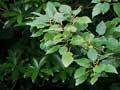
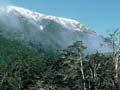
… The flanks of the major ranges are covered in dense native forest up to the treeline (the forest’s upper limit, around 1,200–1,600 metres), except … by fire, landslides or other natural events. Beech forests dominate the drier eastern ranges. A blend of …
Type: Story Page
… as a lecturer in the college's short-lived School of Forestry. Around this time he was also contracted as consultant to the State Forest Service at Waipoua. By the time he finally graduated …
Type: Biography
… Shrublands occur alone, or mixed with grassland and forest, over some 7.5 million hectares – 28% of New Zealand. … Some are temporary, forming one stage in the development of forests. Others are permanent, growing in harsh environments …
Type: Story Page
Part of story: Shrublands … in New Zealand it is usually called kauri gum. Who took the forest? Kauri forest once covered most of Northland, but when people … Polynesians arrived in New Zealand (1250–1300 AD), kauri forests only grew in pockets. The kauri’s current natural …
Type: Story Page
… with the rest of the West Coast. History The flat, heavily forested lowland area between the Haast River and Jackson … – South West New Zealand World Heritage Area The lowland forests of South Westland have long been recognised as one …
Type: Story Page
… island and southern-most settlement. With sheltered inlets, forested hills, rugged coasts, dunes, swamps, scattered …
Type: Story Front
… and novelist Jane Mander, who lamented the passing of the forest. There were also conservationist groups formed to preserve the remnants of native forest in national parks and reserves. However, most people … celebrated the country’s extraordinary transformation from forests, swamps and tussocklands to farms – especially once …
Type: Story Page
… a hapū (sub-tribe) may be the kaitiaki for a lake or a forest. Interest in kaitiakitanga is growing today. Tribal … flightless bird) to extinction, and burnt large areas of forest. They had a negative impact on the environment in … they settled in New Zealand. For example, large areas of forest were felled to make way for farming. Becoming …
Type: Story Page
… ( Nestor meridionalis ) is a noisy and sociable bird of the forest. It is related to the alpine parrot, the kea ( Nestor … wrote of Māori catching 300 kākā a day in the Urewera forest, during the rātā blooming season. Today it is … Range in the Wairarapa, and the central North Island forests of Pureora and Whirinaki. In the South Island they …
Type: Story Page
… in the soil and leaf litter of New Zealand’s native forests. Māori names Māori have many words for ant, … ant species occur all around the country, mainly in forest. Southern ant The southern ant ( Monomorium …
Type: Story Page
… stemmed from times when farmers needed to clear native forest to develop their farms, and from the belief that … damage and animal browsing, and die off. Islands of dying forests surrounded by a sea of grass were common sights …
Type: Story Page
… those about the rival brothers Tāne (god of the forest) and Whiro (god of the underworld). In the narratives … the trees under the care of Tāne, whose domain was the forests. Summer bugs Māori know the bright star Antares as …
Type: Story Page
… were located in Te Kūiti and Benneydale. Farming problems Forests were burned by early settlers to create farmland. … Farming, forestry and mining …
Type: Story Page
… It’s also a land of mountains, lakes and rivers, native forests, and farmlands. Because the country was isolated for …
Type: Story Front
… dams and mills. Conservation Since the New Zealand Forest Service began regenerating the kauri forest in the 1970s, the island has become a stronghold for …
Type: Story Page
Part of story: Auckland places … a metre deep. It has escaped from gardens to overrun forest reserves and displace native plants in Northland, … and Buller. It is also a prolific weed in Hawaiian forests. Ragwort ( Senecio jacobaea ) Ragwort was probably …
Type: Story Page
… vegetation The lowlands were once covered by conifer forests, dominated by tall mataī, tōtara and miro on … was largely deforested by Māori fires. Remaining eastern forests in the North Island did not long survive European …
Type: Story Page
Part of story: Ecoregions … Upper Hutt evokes the pioneers and their struggles. Dense forests have been cleared, rivers bridged and its isolation … Much of his land was cleared, but significant tracts of forest survived and in 1950 were purchased as Upper Hutt’s …
Type: Story Page
… The lower slopes of the mountain are covered in lush rainforest with tall rimu and kāmahi, while the middle slopes have ‘goblin forest’, with gnarled trees and trailing moss. Higher up are … Park covers 74,191 hectares. Occupying a rugged, densely forested landscape between Taumarunui and Whanganui, the …
Type: Story Page
Part of story: National parks … and land development for agriculture. The New Zealand Forest Service controlled forests and forestry, and the Wildlife Service (Department …
Type: Story Page