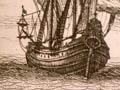
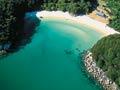
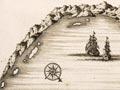
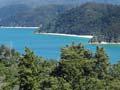
… anniversaries was followed on several subsequent occasions. Tasman’s 350th In 1992 an Abel Tasman Commission encouraged projects to recall the 350th anniversary of Dutch explorer Abel Tasman’s visit to New Zealand. They included a book ( …
Type: Story Page
Part of story: Anniversaries … 2,400 hours. Coastal Golden Bay – less sheltered from Tasman Sea weather systems – gets around 200 hours less. … and natural history The region has three national parks – Abel Tasman (created in 1942), Nelson Lakes (1956) and … and Ataata Point, and at Tonga Island off the coast of Abel Tasman National Park. The eastern inland ranges, such …
Type: Story Page
Part of story: Nelson region … has displaced them. The coarse golden-sand beaches of the Abel Tasman National Park are derived from granite. Topography … and narrow coastal strips between Nelson and Motueka in Tasman Bay and Farewell Spit and Pōhara in Golden Bay. …
Type: Story Page
Part of story: Nelson region … Abel Tasman The 1642–43 expedition led by Dutch explorer Abel Tasman sailed into Tasman Bay and probably sighted Rangitoto …
Type: Story Page
… Discovery In 1642 the Dutch explorer Abel Tasman made the first known European discovery of New … a Dutch mapmaker gave the name Nieuw Zeeland to the land Tasman had discovered. A surprisingly long time – 127 years …
Type: Story Page
… Goblins from the sea With the arrival of the Dutch explorer Abel Tasman in 1642 and subsequently the British explorer James … the European world made its entry into tribal New Zealand. Tasman journeyed up the west coast of the country but did …
Type: Story Page
… The Nelson region includes the area administered by the Tasman District Council. To the east is Marlborough, and to … coast is dominated by two huge, shallow bays – Golden and Tasman. Much of the coast, including Motueka, Golden Bay and Abel Tasman National Park, lie further north than the …
Type: Story Page
Part of story: Nelson region … Explorers and wayfarers Sailors aboard Abel Tasman’s ships were the first Scandinavians to see New …
Type: Story Page
Part of story: Scandinavians … the nature of the indigenous inhabitants. Dutch explorer Abel Tasman and his crew never landed on New Zealand soil, but … wild animals and the abundance of fish. Explorers and Māori Abel Tasman’s bloody confrontation with the Māori of Mohua …
Type: Story Page
… ages and types, leading to diverse landforms. The coastal Abel Tasman National Park has granite headlands and golden … pits such as the 176-metre-deep Harwoods Hole. The remote Tasman Mountains largely lack road access, and are mostly …
Type: Story Page
… and Pākehā was in December 1642, when four crew members of Abel Tasman’s ships were killed by Ngāti Tūmatakōkiri near … in 1827 the French explorer Dumont d'Urville spent time in Tasman Bay, where he met Māori, probably Ngāti Kuia and …
Type: Story Page
… waihuka: the snow water that rushed from glacial sediment. Abel Tasman and James Cook both sailed along the South Island’s … sited on safer ground. The Ball Glacier, which joins the Tasman, was popular for skiing, and several national …
Type: Story Page
… any part of New Zealand was outlined on paper was during Abel Janszoon Tasman’s voyage of 1642–43. Although he never stepped ashore, Tasman, aided by his pilot, the hydrographer Franz …
Type: Story Page
… on the Franz Josef Glacier, and watch the sun set over the Tasman Sea. Middle Earth down under J. R. R. Tolkien’s The … ‘A large land, uplifted high’ In 1642, Dutch explorer Abel Tasman arrived off the South Island’s west coast and saw ‘a …
Type: Story Page
… unlike the simple vertical slab Plischke erected to mark Abel Tasman ’s landfall at Golden Bay, Firth’s canoe prow on the …
Type: Biography
… to form masses of granite now found in areas such as Abel Tasman National Park. Cretaceous granites often cannot be …
Type: Story Page
… country’s most powerful lights, visible for some 50 km. The Tasman Sea and the Pacific Ocean meet at the headland. It … van Diemen. They were named the Three Kings Islands by Abel Tasman in 1643. The largest is Great Island, also known as …
Type: Story Page
… Māori and Pākehā. Four crew members from Dutch explorer Abel Tasman’s ships were killed by Māori near Separation Point, … In 1827 the French explorer Dumont d'Urville spent time in Tasman Bay, where he met Māori, probably Ngāti Kuia and …
Type: Story Page
Part of story: Nelson region … by a Dutch cartographer some time after the Dutch explorer Abel Tasman made the first recorded European landfall in 1642. …
Type: Story Page
… As new parks were added, walking tracks followed. Abel Tasman National Park (1942): a track was made around the … Northern Circuit Whanganui Journey (by river) South Island Abel Tasman Track Heaphy Track Routeburn Track Milford Track …
Type: Story Page
Part of story: Walking tracks