… hero Māui. Māui fishes up the North Island One of the greatest stories of Māori literature recounts the fishing up of the North Island. It …
Type: Story Page
… Apirana Ngata composed waiata-ā-ringa in the early 1900s. Te Puea Hērangi of Waikato is also regarded as a pioneer of … song. In 1917 she composed ‘E noho e Rata’. It was a tribute to the Māori King Te Rata, but is now sung with reference to the present Māori …
Type: Story Page
… Hīkaka was born probably at Paripari (near present day Te Kūiti) in the early 1840s. He could trace his descent … along with Taonui senior, was part of a group portrait painted by George French Angas in 1844. Taonui is believed to …
Type: Biography
… Louis Hekenui Bidois, commonly known as Heke, was born at Te Puna, near Tauranga in the Bay of Plenty, on 28 March … Louis Bidois and Englishman John Lees Faulkner . His paternal grandmother was Erihāpeti Kaumoana of Pirirākau hapū …
Type: Biography
… (Maria) Hokiwi Ward. His father’s tribal affiliations extended from Wairoa to Waiapu, but he was principally of Rongowhakaata , Te Aitanga-a-Mahaki and Te Aitanga a Hauiti. His maternal …
Type: Biography
… and his wife, Mary Ann Balfour Moody Shearer. He emigrated to New Zealand with his parents in 1903, and spent his youth at Mosgiel. After attending the University of Otago he studied at the …
Type: Biography
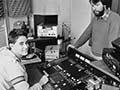
… Māori radio The first iwi radio station, Te Upoko o te Ika in Wellington, officially began broadcasting in 1987. …
Type: Story Page
… Architecture From the 1950s modernist Māori artworks began to emerge in forms such as architecture as well as the visual arts. In the whare-like Futuna … (built 1958–61), John Scott produced the most enduring masterpiece of New Zealand modernism. Scott and Wiremu Taurau …
Type: Story Page
… eldest son of Thomas McDonnell and his wife, Anna Patterson, was born probably some time between 1831 and 1833, … one time, 17 cannon. He was an able but disputatious and pretentious man. He quarrelled with almost everyone of note in …
Type: Biography
… James Livingston, a founding settler of the Patea district, was born on 7 February 1840, at Darngarroch, … he received little formal education. Livingston and a sister emigrated to New Zealand in 1859, arriving in Auckland …
Type: Biography
… Māori recruitment E te iwi, whītiki! Whiti! Whiti e! 1 O people, gird yourselves … was a group of young Māori leaders who had been students at Te Aute College, Hawke’s Bay, in the 1890s. While dedicated …
Type: Story Page
… of a hundred lovers), referring to the desirable, fertile site at the hub of a network of waterways taking travellers north, south, east or west. For centuries different groups flourished, cohabited and displaced each other in turn. Canoes None of the …
Type: Story Page
Part of story: Auckland region … mythological precedents. Deities who are strongly associated with waiata and haka include Hineruhi, Tānerore and … her dance is said to be the sparkle of light that is reflected in the morning dew. When a woman performed in the whare …
Type: Story Page
… Transport links assisted settlement and helped Waikato agriculture and industry … Coastal and river shipping In the 19th century people entered and left Waikato through west-coast seaports, … of the region. Inland, rivers were the easiest transport routes. The Waikato River was navigable from Port Waikato to …
Type: Story Page
Part of story: Waikato region … The Waitematā Harbour (also known as Auckland Harbour) is a drowned … the west, and sandy bays with sandstone cliffs along the eastern shores. The harbour’s deep navigable channels and … Waitematā Harbour …
Type: Story Page
Part of story: Auckland places … Rankin, a Kaikohe storekeeper. Matire was the daughter of Niurangi Pūriri and Hōne Ngāpua, a nephew of Hōne … of Islands leader who signed the Treaty of Waitangi but later cut down the Kororareka flagstaff. Her brother, Hōne …
Type: Biography
… Early caving Māori used caves sometimes for shelter, but mainly as burial grounds. For this reason many were sacred sites. The earliest European explorer of limestone caves was probably Arthur S. Thomson. In 1849 and 1852 he collected moa bones from caves near Waitomo in the King Country. …
Type: Story Page
… While Te Ara – The Encyclopedia of New Zealand , of Manatū Taonga Ministry for Culture and Heritage, is committed to accuracy it can accept no liability for any loss or … incurred through or subsequent to the use of this website or its contents. If you find any information on this …
Type: Basic page
… and insects – are said to be repulsive. Punga’s son Tū-te-wanawana, along with Tūpari, produced the following … the origins of reptiles. In one tradition, reptiles originated from Peketua (the son of the earth mother, Papatūānuku, …
Type: Story Page
… Taiuru of Rata in the Rangitīkei district, was connected to both Ngāti Tūwharetoa and Ngāti Kahungunu through his … Ngāti Haukaha, Ngāti Hikairo and Ngāti Whiti-Tama (the inter-married hapū Ngāti Tamakōpiri and Ngāti Whitikaupeka). …
Type: Biography