… visitors to a marae, is based on creation traditions, which tell of the separation of earth and sky and the movement … place upon the ground in front of the meeting house (marae ātea), is a re-enactment of the creation of the world through …
Type: Story Page
… the cradle of Ngāti Hine, in 1807; his name at birth was Te Kūhanga. He was the third and youngest son of the chief Te Ruki Kawiti and his wife, Kawa. His two elder brothers …
Type: Biography
… these tribes, which included Ngāti Toa, Ngāti Raukawa, and Te Āti Awa and others from Taranaki, settled on the Kāpiti Coast. Their arrival altered the balance of power in the lower North Island and led … almost sacked, but fortunes changed when a Ngā Wairiki fighter killed a leading Whanganui chief, Takarangi Atua. …
Type: Story Page
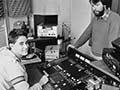
… harshly by the government.’ Rebuilding an iwi During the late 20th century Ngāti Awa leaders began the difficult task … authority, the Ngāti Awa Trust Board and its successor, Te Rūnanga-o-Ngāti Awa. The tribe have a radio station, Te Reo Irirangi-o-Te Mānuka Tūtahi, and a centre of higher …
Type: Story Page
… and undisturbed possession of their Lands and Estates, Forests, Fisheries, and other properties … so long as … three main ways in which Māori tribes lost land and associated resources were: government purchases of Māori land at … with promised land reserves either not provided or inadequate to sustain Māori communities confiscation (raupatu) of …
Type: Story Page
… for war Waikato was the home of the Māori king. Pōtatau Te Wherowhero had been proclaimed the first king in 1858, and in 1860 he was succeeded by his son, later known as Tāwhiao . Some of the king’s followers had …
Type: Story Page
… the spiritual world through the whakapapa of the natural materials from which they are woven, the values and ancestral … with Hine-rauamoa, the wife of Tāne-nui-a-rangi. Aitia te wahine i roto i te pā harakeke. Marry the woman found in … Weaving traditions and technique …
Type: Story Page
… a sub-tribe of Ngāi Tūhoe, and includes the settlements of Te Whāiti and Minginui. Logging In 1978–79 there was bitter conflict over Whirinaki. Conservation activists opposed … Forest Service and locals working in Minginui sawmill supported it. All logging of native forests ended in 1985. Since …
Type: Story Page
… as a result of the urbanisation of Māori in the later 20th century. Kaumātua, who should have been expected to be familiar with tribal history and traditions, have …
Type: Story Page
… Tūrei was born probably about 1830 and was brought up at Te Kautuku, near Rangitukia, in the Waiapu district, where … his parents lived on their ancestral lands. His father was Te Omanga Tūrei of Ngāti Hokopū and his mother Mākere …
Type: Biography
… Te Ika a Maui Players The rise of Māori political activism … The first theatre company set up and run by Māori was Te Ika a Maui Players, formed in 1976, initially to present … l and . The play toured nationally for three years, and a television version screened in 1978. Two founding members of …
Type: Story Page
… Maharaia Winiata, commonly known as Maha, was born on 29 September 1912 at Ngāhina pā, near Rūātoki, in the eastern Bay of Plenty. His parents were Winiata Piahana and his …
Type: Biography
… Mana whenua Traditionally, Māori had a complex system of property and land rights. Mana whenua means tribal … villages near areas that provided resources such as food, often with a pā nearby. However, groups often moved between …
Type: Story Page
… Lake Rotoiti Lake Rotoiti’s full name, Te Rotoiti-kite-a-Īhenga, links it to Īhenga, the early ancestor from the Te Arawa canoe, who is credited with exploring the lakes …
Type: Story Page
… in Kapowairua Bay. When he was very old he announced his intention to travel south and see his only daughter, Rāninikura, who had married a man from the Kaipara near … him not to go. Tōhē replied that although one could shelter from the wind, one could not shelter from the longing to …
Type: Story Page
… Encountering the bush When the ancestors of Māori arrived in New … People developed a reverence for and knowledge of te waonui-a-Tāne – the great forest of Tāne. Tāne in tribal …
Type: Story Page
… William Arthur Moffatt (Māwhete) was born at Tiakitahuna (Jackeytown), south of … mother, also known as Ārani or Ārini, was the grand-daughter of Wiremu Kīngi Te Aweawe. His main tribal affiliation … Māwhete, Rangiputangatahi …
Type: Biography
… South Island (Te Wai Pounamu) territories After the difficult migration from their homeland in Kāwhia to …
Type: Story Page
… John Ormsby (Hone Omipi), of Ngāti Te Waha and Ngāti Pourāhui hapū of Ngāti Maniapoto, was born, according to family information, at Te Kōpua, near Pirongia Mountain, on 6 November 1854. He was …
Type: Biography
… hapū of Ngā Rauru. Ruka had a brother, Toherangi, and a sister, Taihape. His father successfully farmed Rēhia’s land holdings at Maxwell, north of Whanganui. Ruka attended Maxwell School, Wanganui Technical College and Te …
Type: Biography