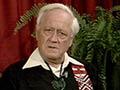
… was born at Kaiti, Gisborne, on 18 May 1898, the ninth of ten children of Irish immigrants Hugh Heeney, a labourer, and his wife, Eliza Coughlan. He was educated in Gisborne at St Mary's and Te Hapara schools, and after working briefly for a …
Type: Biography
… 19th-century ‘expatriates’ In the 19th century many Pākehā who had been born in … thought of themselves as exiles from ‘Home’. They imported British and European culture and intellectual values, and tried valiantly to reproduce aspects …
Type: Story Page
… towns and cities with railway stations began to promote themselves as holiday destinations in the late 19th and early 20th centuries. One such place was Timaru. … for new holiday beaches beyond the cities began. Dunedinites Thomas Hocken and George Fenwick promoted the Catlins …
Type: Story Page
… Ireland, on 1 August 1864, the son of Robert Jones, a painter, and his wife, Eliza Rae. Brought to New Zealand as an infant, he was educated in public schools in Auckland and Gisborne. He was admitted as a solicitor in 1890 and a barrister in 1899. On 22 …
Type: Biography
… He first came to notice in 1852 when Donald McLean negotiated with him on behalf of the government to buy Māori-owned … northern flanks of Mt Taranaki. He was subsequently recruited as the third Māori member of Inspector George Cooper's New Plymouth detachment of the New Ulster Armed Police Force. The Māori constables, of significant …
Type: Biography
… Early farming in New Zealand was dominated by large sheep runs in the east of the North and South … runs were developed in the open tussock country of the eastern South Island in the 1850s and 1860s. Settlers had to … called runs or stations, while large lowland farms were often known as estates. On lowland estates, as well as running …
Type: Story Page
Part of story: Rural workers … sought a balance between work and leisure – a balance determined largely by how much effort was needed to produce … would have been relatively more leisure than there was later: the human population was at its lowest, and protein was easily accessible in the form of kekeno (fur seals) …
Type: Story Page
… There were certainly people who were familiar with patterns of bird migration. For example, the direction of the … Tonga and Samoa. Ancestors of the Māori may have speculated that there was land in the south-west Pacific, as the … sunrise to fish, then return to their nests at sunset. Frigate birds fly up to 100 km from land, gannets and petrels 70 …
Type: Story Page
… James Cook In November 1769, Lieutenant James Cook spent three weeks in the region. He … visitors, whose glowing reports brought Hauraki to the attention of Europe. The tree measured by Cook A kahikatea in the vicinity of present-day Hikutaiā had a …
Type: Story Page
… of the 20th century New Zealand was, in effect, two separate countries. The non-Māori population lived mainly in … New Zealand was almost entirely rural and, until the late 1930s, received lower welfare payments than non-Māori. … the future, when ‘we shall have no Maoris at all but a white race with a dash of the finest coloured race in the …
Type: Story Page
… a farmer, and his wife, Hughina McLachlan. McCaw was educated at the Kirkoswald parish school and at the Ayr Academy. He attended the Andersonian Institution in Glasgow in 1866 then assisted his father on a farm at Greysouthen, Cumberland, for …
Type: Biography
… parish, County Wicklow, Ireland, probably on 1 September 1808, the son of Elizabeth Armstrong and her husband, George Ogle Moore. Lorenzo is said to have entered the service of the East India Company at the age of … to the rank of major. While in India, at Poona on 6 September 1834, he married Elizabeth Bodington. Moore was …
Type: Biography
… Porirua cities and the Kāpiti Coast. It includes all of the territory of Greater Wellington (the Wellington regional council) except … 212,300 hectares of mostly rugged country. Flat land is limited. Settlements have developed at Wellington, around …
Type: Story Page
… This would ordinarily put the two land areas on opposite sides of the International Date Line, but this was shifted to allow the islands to …
Type: Story Page
Part of story: Chatham Islands … the Ruamāhanga River flows south-eastwards across the Masterton basin, then turns south-west down the east side of the Wairarapa basin. Directed along an artificial channel at Lake Wairarapa, it drains … 29 km south-west of Martinborough. Pirinoa is the site of Kohunui marae, which features the Tuhirangi meeting …
Type: Story Page
… about logic and reasoning, ethics and morality, existence, reality, alternative worlds and human nature. Setting In New Zealand, … exists within universities. While philosophy graduates have worked in a wide range of fields, universities are …
Type: Story Page
Part of story: Philosophy … A public protest is a means for people to complain in a public way about … they think is wrong and build support to correct it. Protests can take the form of an individual writing a letter to a newspaper – or a march of thousands along city … Public protest overview …
Type: Story Page
Part of story: Public protest … River in November 1862. A town sprang to life; the site of Rees’s old homestead, the Camp, is in the centre of Queenstown. Growth over time After gold fever waned, the town declined. Through the first …
Type: Story Page
Part of story: Otago places … to assist progress on claim settlement: The Crown negotiated with representatives of claimant communities once it felt that those representatives had a suitable mandate from their people. As a result of negotiations following court action, Crown lands or other interests transferred to state-owned enterprises had …
Type: Story Page
… sporting contacts with apartheid-era South Africa, but protests began in 1960. Prior to this New Zealand Māori rugby teams played against the Springboks in 1921 and 1956. The … come was foreshadowed in the 1921 match played in Napier, after which a South African journalist sent a telegram home. …
Type: Story Page