… in January 1881 with his parents, two brothers and two sisters. The family lived in Te Puke until September 1882 when John Duncan became manager of the …
Type: Biography
… a peaceful contrast to the city’s bustle. Flat land is limited to Lowry Bay, Days Bay and Eastbourne. Elsewhere houses cling to hillsides. Eastbourne, named after a seaside resort in southern England, is the largest. It … centuries Māori occupied kāinga (settlements) in the sheltered bays, and more substantial pā on the headlands. Pā …
Type: Story Page
… Wellington’s harbour is surrounded by hills. Beyond its eastern shores, the bush-clad ridges of the Remutaka Range dominate the view. Here the southernmost section of the North … mountainous spine meets the sea. The Remutaka Range extends from the Remutaka Hill Road (north of Upper Hutt) to …
Type: Story Page
… From the late 1960s, New Zealand’s highly regulated economy began to falter. With exchange and interest rates and much else fixed by …
Type: Story Page
… His father was Scottish and his mother French. He attended Leamington and Tonbridge schools, and in 1892 … Oxford. However, he left in 1895 when he was 22 and emigrated to New Zealand, where he lived in the Wanganui region … instructor. Hall helped Pukehika make a small canoe named Te Ao, which Hall often used for moving from camp to camp up …
Type: Biography
… Inger Kathrine Nielsen was born on 5 September 1867, at Tyrsted, near Horsens, Denmark, to Mette Katharine Mikkelsen and her husband, Søren Nielsen, a …
Type: Biography
… Gay liberation The 1970s were a watershed in the history of lesbian and gay lives in New Zealand. Following international trends, women's liberation groups (which … lesbian women) organised from 1970. Gay liberation started in New Zealand in 1972 after protests by Auckland …
Type: Story Page
Part of story: Lesbian lives … children, Thomas Bull, and Isabella Brind, the granddaughter of Rewa, a Ngāpuhi leader. Abuse by Bull, who worked with Maketū on Roberton’s farm, appears to have prompted these murders. Maketū’s father handed his son over to … the authorities to avoid conflict with Rewa. He was convicted and hanged in 1842. James Stack In September 1865, …
Type: Story Page
Part of story: Violent crime … Samuel Mitchell was born on 8 September 1841, at Aspley, near Woburn, Bedfordshire, England, the son of William Mitchell, a labourer and later a Wesleyan minister, and his wife, Eleanor Field. Mitchell entered the Royal …
Type: Biography
… of his marriage, although he is known to have had six daughters. Mould was commissioned as a second lieutenant in the Royal Engineers on 22 September 1826, and over the following 29 years held a variety …
Type: Biography
… Probably in 1865 Mundy moved to Christchurch where he entered into partnership with Braham La Mert. By 1867 he was … worked principally as a portrait photographer, but after a photographic expedition to the West Coast in 1868 he … was possibly the first New Zealand photographer to concentrate exclusively on this branch of the profession. Others may …
Type: Biography
… Nixon, an army officer, and his wife, Elizabeth Browne. After graduating from the Royal Military College, Sandhurst, … of Foot, which he accompanied to India. Nixon was promoted to lieutenant in 1833 and fought in the Coorg campaign of that …
Type: Biography
… and baptised there on 24 February 1843, the son of Peter O'Reilly, a farmer, and his wife, Mary Keane. Peter and Mary O'Reilly brought their family to Auckland, New Zealand, in 1852. Patrick attended the boys' school attached to St Patrick's Cathedral …
Type: Biography
… Some made their mark in New Zealand and others on the international stage. Performers such as Donald McIntyre and Kiri Te Kanawa are among the most recognised New Zealanders … number of New Zealand opera singers who have achieved international recognition. Two of the earliest operatic stars …
Type: Story Page
… As time would tell, the big deposits were in Otago, the West Coast and on … to the workings, as initially these were very rich. A tent town sprang up, with 3,000 men giving the name … gravels were worked out quickly and the rush soon passed. Later, reef gold was also discovered, but it was low grade and …
Type: Story Page
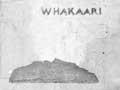
… Mayor Island is discernible, and closer in, Mōtītī and White (Whakaari) islands. Moutohorā (Whale Island) dominates the foreground. To the east, the spurs of the bush-clad … – Mauao Mt Edgecumbe – Pūtauaki Mayor Island – Tūhua White Island – Whakaari Whale Island – Moutohorā A line of …
Type: Story Page
… they are going out to gather kaimoana (seafood), they are often only going for pāua and kina. Pāua Pāua ( Haliotis iris … into pā kahawai, a fishing lure. They are also used extensively for jewellery. Some people use the hua (stomach or roe) in pāua fritters, or by itself, but most pāua are taken only for the …
Type: Story Page
… The Pentecostal Christian revival movement reached New Zealand in … 20th century, and emphasised faith healing, miraculous interventions and adult baptism. Some of these features attracted Māori to join the new movement. In 1928 a British … Pentecostal churches …
Type: Story Page
… laundry and relaxation. Puia (geysers) were probably treated with caution. Food was preserved using the available … in geothermal areas was not without its hazards. Henry S. Bates, visiting Ōrākei Kōrako in 1860, recorded in his diary that a Māori child had fallen into the Te Mimi-a-Homoaiterangi geyser. Dangerous gases The gases …
Type: Story Page
… areas of the sea and foreshore where all marine life is protected. People are allowed to use them for recreation, but fishing or removing marine life is prohibited. By 2014, 44 marine reserves had been created around the … Protected marine areas and inland waters …
Type: Story Page
Part of story: Protected areas