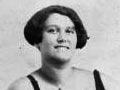
Ramai Hayward was a pioneering documentary and feature film-maker. She trained as a photographer in the mid-1930s and had established her own studio in Auckland when she starred in Rudall Hayward’s landmark film…


Ramai Hayward was a pioneering documentary and feature film-maker. She trained as a photographer in the mid-1930s and had established her own studio in Auckland when she starred in Rudall Hayward’s landmark film…
The Holyoake connection with New Zealand goes back to 1843, when the great-grandparents of Keith Jacka Holyoake settled at Riwaka, near Motueka, and it was there that he spent much of his youth and began his farming…
Bill Pearson was an important mid-twentieth-century fiction writer, cultural commentator and academic, best known for his social realist novel Coal Flat (1963) and polemical essay on New Zealand identity, ‘Fretful…
Andrew Hamilton Russell was born at Napier, New Zealand, on 23 February 1868 to Katherine Sarah Tinsley and her husband, Andrew Hamilton Russell, who with his brother William Russell had taken up Tunanui station in 1861…
Film buff, archivist, award-winning radio producer and film critic Jonathan Dennis had a sardonic wit, a brutal honesty and a genuine passion for his work. As founding director of the New Zealand Film Archive he…
Colin John McCahon was born in Timaru on 1 August 1919, the second of three children of Ethel Beatrice Ferrier and her husband, John Kernohan McCahon, a commercial traveller, and later a company manager. Ethel McCahon…
Te Arikinui, Dame Te Atairangikaahu was the first woman chosen to lead the Kīngitanga (the Māori king movement). She served as Māori queen for over 40 years, the longest reign of any Māori monarch. Te Atairangikaahu…
John Cawte Beaglehole was born in his parents’ house in Hopper Street, Wellington, on 13 June 1901, the second of four sons of Jane Butler and her husband, David Ernest Beaglehole. David was a serious-minded young man…
Les Cleveland made important contributions to New Zealand’s visual, musical, literary and academic culture. There were overlaps, continuities and connections between all his diverse interests, which ranged from the…
Ernest Rutherford was born at Spring Grove in rural Nelson, New Zealand, on 30 August 1871, the fourth child of 12 born to James Rutherford, a mechanic, and his wife, Martha Thompson, who had been the schoolteacher at…
In the second half of the twentieth century, Keith Sinclair transformed how New Zealanders understood themselves and their history. A prominent poet and New Zealand’s most important historian of the 1950s and 1960s, his…
Ian Cross was a distinguished novelist, journalist, editor, broadcaster and administrator, best-known as the author of The God boy (1957), one of the finest and most enduringly popular New Zealand novels of the…
M. K. Joseph was a novelist, poet, and literary academic of the 1940s–1970s, best known for the powerful short novel, A soldier’s tale. Outwardly conservative, with a professorship, scholarly publications, a stable…
John Ross Marshall was born in Wellington on 5 March 1912, the son of Allan Marshall, a clerk, and his wife, Florence May Ross. His father was from Perthshire, and his mother’s family had also originally come from…
Māui Wiremu Piti Naera Pōmare was one of the generation of Māori leaders educated at Te Aute College in the 1890s who were to assume positions of leadership in both the Māori and Pākehā worlds. His birthplace was Pāhau…
Wolfgang Rosenberg was an influential economist and public intellectual in New Zealand during the second half of the twentieth century. A refugee from Nazi Germany, he spent much of his working life as a lecturer in…
Tupu Atanatiu Taingākawa Te Waharoa was the second son of Wiremu Tāmihana Tarapīpipi Te Waharoa and Pare Te Kanawa (Wikitōria). They belonged to Ngāti Hauā, but also had links with Ngāti Hinepare (a hapū of Ngāti…
Edward James Te Āika Tregerthen, later known as Eruera Tīhema Tirikātene, was born on 5 January 1895 at Te Rakiwhakaputa pā near Kaiapoi. His father, a carpenter, later a skipper of boats, wheat farmer and minister of…
Whina Cooper was born Hōhepine (Josephine) Te Wake at Te Karaka in northern Hokianga on 9 December 1895. Her father was Heremia Te Wake, a leader of Ngāti Manawa and Te Kaitutae hapu of Te Rarawa and the…
Rua Kēnana, sometimes known as Ruatapunui, has usually been considered to be the posthumous son of Kēnana Tūmoana of Ngāti Kahungunu, who was killed fighting for Te Kooti Arikirangi Te Tūruki at Mākāretu sometime…