

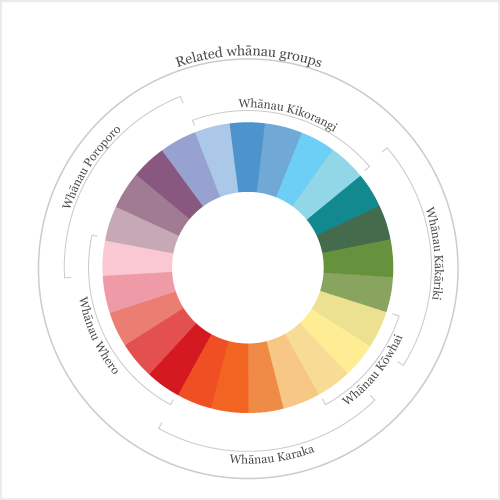
Whānau can be an entity in its own right, or an entity within a larger collective. The heads of whānau may be brothers and sisters, who as their whānau have grown, have become heads of new, separate entities. Each new whānau may have three or four generations. They are all connected to the collective whānau by their common whakapapa. Although each whānau operates independently, the wider whānau come together for tangihanga, weddings or other occasions.
Using this item
Te Ara - The Encyclopedia of New Zealand
This item has been provided for private study purposes (such as school projects, family and local history research) and any published reproduction (print or electronic) may infringe copyright law. It is the responsibility of the user of any material to obtain clearance from the copyright holder.