

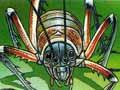
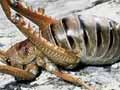
Wētā is the Māori name for a group of large, spiny, wingless grasshopper-like insects. These giants of the insect world are normally found in dark, damp tunnels in hollow trees, rock cavities or soil, anywhere from sand dunes to above the snowline. Wētā are related to grasshoppers, locusts, crickets and katydids (all members of the order Orthoptera) and, like their relatives, have powerful hind legs for jumping.
Wētā families
New Zealand has over 100 different species of wētā in two families: the Anostostomatidae and the Rhaphidophoridae.
Anostostomatids are large-bodied wētā with heavy legs. There are four groups:
- tree wētā
- giant wētā
- ground wētā
- tusked wētā.
Rhaphiophorids are more athletic and have smaller bodies. They have very long, slender legs and can perform enormous leaps. They are commonly known as cave or jumping wētā.
Wētā overseas
Although these wētā species are found only in New Zealand, there are wētā-like insects in Australia, South Africa, South America, Europe, Asia and North America. Outside New Zealand, similar heavy-bodied, burrowing insects are known as king crickets. Light-weight jumping varieties are known as cave crickets or camel crickets.