

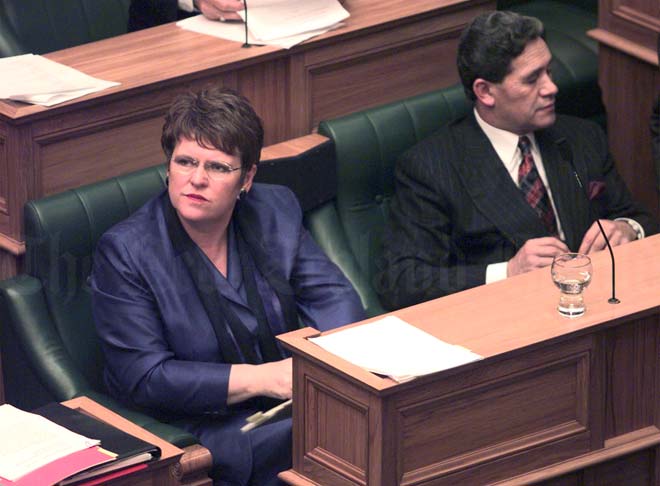
Collective cabinet responsibility is one of New Zealand's key constitutional conventions. It refers to the collective power of the cabinet to direct individual ministers, all of whom have to publicly support cabinet's decisions. Occasionally, collective cabinet responsibility breaks down. This occurred in 1998 when deputy prime minister, treasurer and New Zealand First MP Winston Peters was sacked from cabinet after publicly disagreeing with the cabinet decision to sell the government's 66% stake in Wellington International Airport. Peters is pictured in Parliament's debating chamber with the prime minister and National Party leader Jenny Shipley in 1998. From 1999 coalition governments adopted 'agree to disagree' provisions to manage policy disagreements between coalition partners at the cabinet level.
Using this item
Reference: 1308NZHPKEPARL3.JPG
by Paul Estcourt
Permission of the New Zealand Herald must be obtained before any re-use of this image.